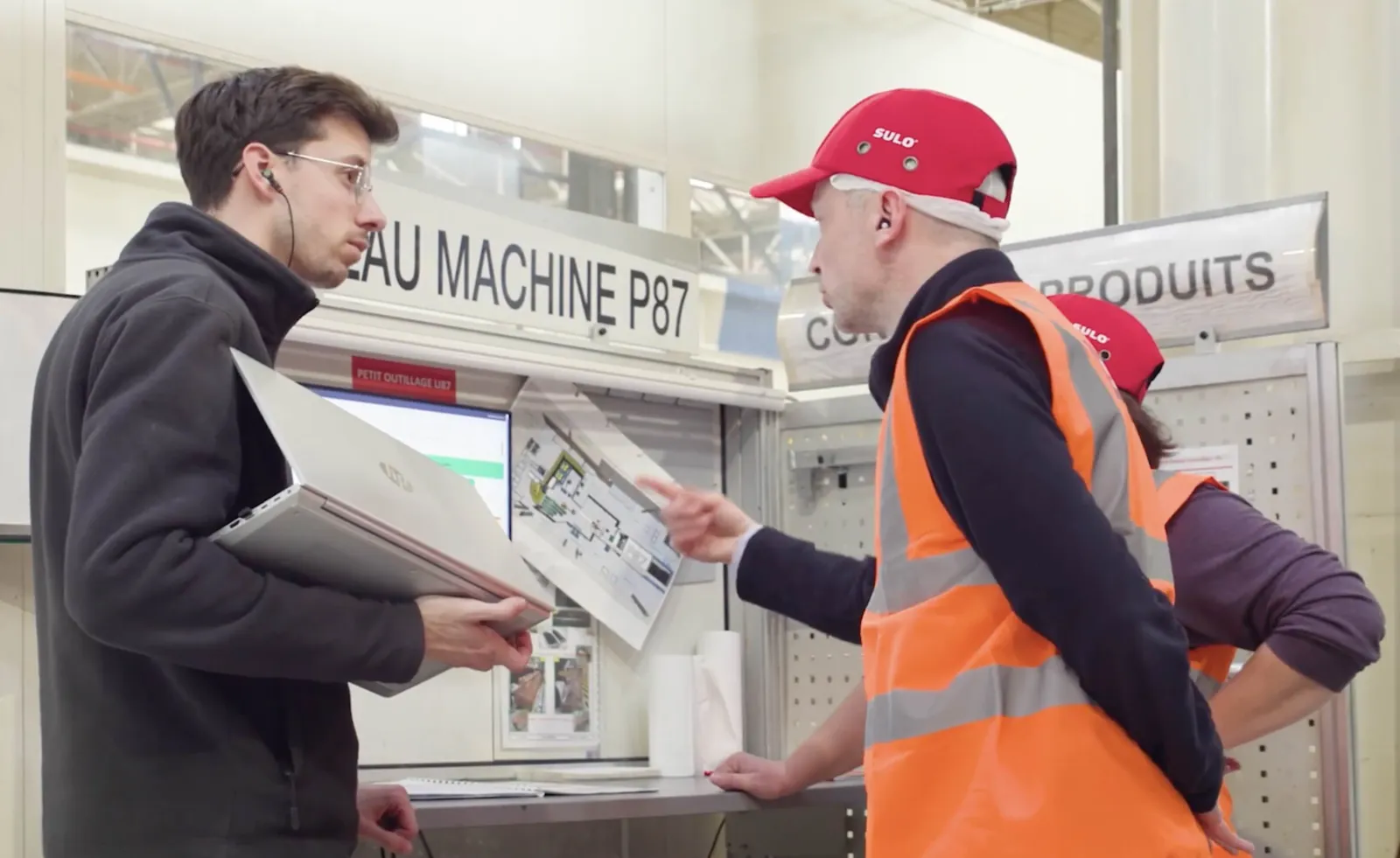
Sulo makes waste collection bins by plastic injection molding. With 83% recycled material on average, managing production variability is a real challenge. To keep its process stable despite this, the plant deployed OIAnalytics: traceability for every bin, analysis of thousands of parts and real-time monitoring of its presses. The outcome: better quality, higher productivity from its production equipment and less time lost producing reports.
Sulo designs and manufactures wheeled bins for waste collection, in two-wheel and four-wheel versions. These bins are made by plastic injection molding, notably at the Langres plant in northeastern France.
The company originated from Plastic Omnium, taking over its urban equipment business. It is now part of SULO Group, a European player in waste pre-collection.
What sets the plant apart is its raw material. Sulo uses 83% recycled material on average. Each source of recycled material has its own characteristics and brings its share of variability to the injection molding process.
“The key to the process is stability, so the goal is to improve process stability despite using recycled materials.” (translated from French) — Arthur Massé, Process Manager, Sulo (Langres)
The plant did not start from scratch. In particular, the site already had data from its production equipment. Its teams had first moved from Excel files to Power BI analyses. But one gap remained: correlating recycled materials with process data from the shop floor.
Sulo therefore turned to digitalization to speed up its understanding of its processes. The aim was to link data that could not be connected before: machine data, material data and utilities data. The goal: step back from that data, put it in context and run deeper analyses to improve performance.
With OIAnalytics, Optimistik's industrial data analytics platform, Sulo collects and contextualizes data for every part it produces. The solution makes it possible to monitor parameters continuously and run analyses almost instantly.
It is first used for product traceability. A technician selects a bin and sees all the data related to its production: raw materials, injection conditions and more.
It also supports large-scale analysis. Teams can, for example, plot the last 10,000 molded bins over time. OIAnalytics then surfaces correlations and improvement opportunities.
“That's where the magic happens with the tool: it brings out correlations and avenues for improvement.” (translated from French) — Vincent Drouin, Data Engineer
This broader view helps reveal patterns that are not visible at the machine.
Technicians use OIAnalytics every day. They move between dashboards and check machine parameters in real time. They receive alerts on selected maintenance data, which makes the team proactive about events on the shop floor.
The tool covers the entire fleet of presses and molds: deviations, applied tolerances and injection conditions. A screen available all day long makes it possible to identify quality drifts in real time.
“The adoption rate is quite high in the team because it really is a complementary tool that helps them, and it came quite naturally.” (translated from French) — Vincent Drouin
For Sulo, it is a new way of working: after notebooks, Excel spreadsheets and then dynamic dashboards, Optimistik brings new analysis capabilities, notably with AI.
“It also means a huge time saving for the teams, because we no longer print out the paperwork for every press every month.” (translated from French) — Audrey Oblinger, Quality Coordinator
At Sulo, OIAnalytics finally connects recycled materials with machine data. Bin-by-bin traceability, analysis across thousands of parts and real-time monitoring help keep a stable process with a variable raw material.
to see how OIAnalytics can unlock the value of your plant data